
Published: March 16, 2026
Alcohol-free and low-alcohol beer is no longer a niche side project. It’s a fast-growing, global business. The non-alcoholic beer market alone is estimated at around USD 29.4 billion in 2024 and is forecast to almost double to roughly USD 58.7 billion by 2033, with a projected CAGR of 8.2%. Europe currently holds the largest share of this market, while Asia-Pacific is the fastest-growing region and North America is also seeing strong momentum.
For breweries, though, meeting this demand is far from straightforward. Reducing alcohol while maintaining the flavor, body, and aroma drinkers expect means making smart choices about ingredients, selecting the right brewing methods, and tightly controlling and documenting every step of the process – all while navigating different legal definitions of “alcohol-free” and ABV certification requirements across markets.
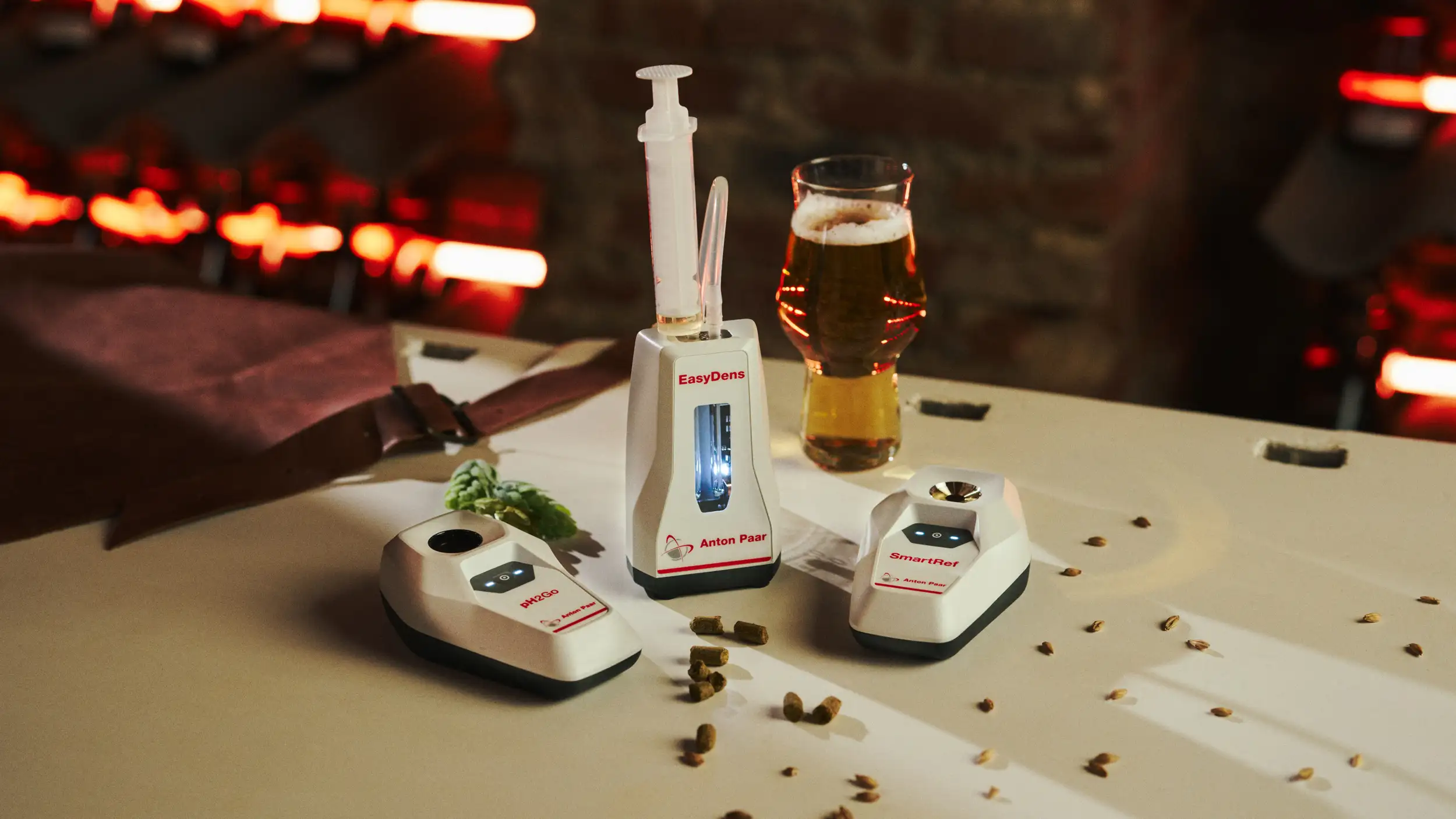
In this article, we’ll look at the key challenges of producing alcohol-free and low-alcohol beer: comparing brewing methods, controlling and measuring the process with EasyDens, SmartRef, and the brand-new pH2Go, and understanding legislation and certifications. We’ll also show how consistent measurement and smart tools can help you assure a high-quality end product while saving time and money.
What We’ll Cover in This Piece:
How Low-Alcohol and Alcohol-Free Beer Is Made: Comparing Brewing Methods and Processes
Alcohol-free and low-alcohol beer brewing is mostly about where you reduce alcohol: either you limit alcohol formation during fermentation, or you brew a standard-strength beer and remove alcohol afterward. Because non-alcoholic beer has less of alcohol’s natural “protection” (and typically less CO₂ production and a smaller pH drop), breweries also need tighter hygiene and handling than with standard beer.
In practice, most alcohol-free and low-alcohol beers are produced using one or a combination of the following methods:
1. Limited fermentation via recipe and mash design
This is the most accessible route for many craft brewers because it uses standard brewhouse and cellar equipment. The goal is a wort that doesn’t ferment very far. Common tactics include warmer, shorter mashes (to reduce fermentability) and a lower original gravity, so even a small drop in gravity doesn’t create much alcohol. The challenge is balance: too many unfermented sugars can taste “worty,” so brewers often adjust hopping, acidity, and carbonation to keep the beer crisp. Building on this, brewers use one of the following two options to further limit alcohol production:
1a. Specialty yeast (low-attenuating / maltose- and maltotriose-negative)
These yeast strains ferment only simple sugars (like glucose, fructose) but leave larger malt sugars (like maltotriose or dextrins) and maltose behind, which naturally limits alcohol production. This can be a very craft-friendly option because it doesn’t require special equipment—just the right yeast choice and a recipe designed for the sweeter finish. Some suppliers also highlight these strains as a way to reduce “worty” character compared to other low-ABV approaches.
1b. Arrested fermentation (stop fermentation early)
Fermentation begins with a standard brewing yeast, but it’s stopped early, usually by rapidly chilling the beer, removing yeast (via filtration or a centrifuge), and then stabilizing it. This can help retain some fresh fermentation character, but it also demands excellent hygiene and tight packaging control: any remaining yeast or fermentable sugars can restart fermentation in the tank or in the package.
2. Dealcoholization (remove alcohol after brewing)
Dealcoholization starts with brewing a full-strength beer (so you build true fermentation flavor), then removing ethanol. The most common options include vacuum distillation and reverse osmosis/membrane separation. These can produce very low-ABV beers, but they add cost and complexity, and brewers must manage aroma loss—often by capturing and re-adding volatile compounds.
3. Blending / dilution (where legal and quality-acceptable)
Blending can mean diluting a stronger (often more concentrated) beer after fermentation to land below a target like 0.5% ABV. It’s simple and consistent, but it can thin body and flavor, so it works best when the base beer is built for dilution and local rules allow it.
Return to top
How Tools Like EasyDens, SmartRef, and pH2Go Help You Control Alcohol-Free Brewing
Non-alcoholic and low alcohol beer is less forgiving than conventional beer. When the target is 1.2% ABV or lower, small process shifts matter. A slight change in wort gravity, fermentation progress, or blending ratio can move the beer out of specification or leave the beer thin, sweet, and unstable. Because non-alcoholic beer typically contains less alcohol, often shows a smaller pH drop, and provides more nutrients for microbes, it behaves more like a perishable product. This makes tight measurement, tracking, and documentation essential, especially after fermentation.
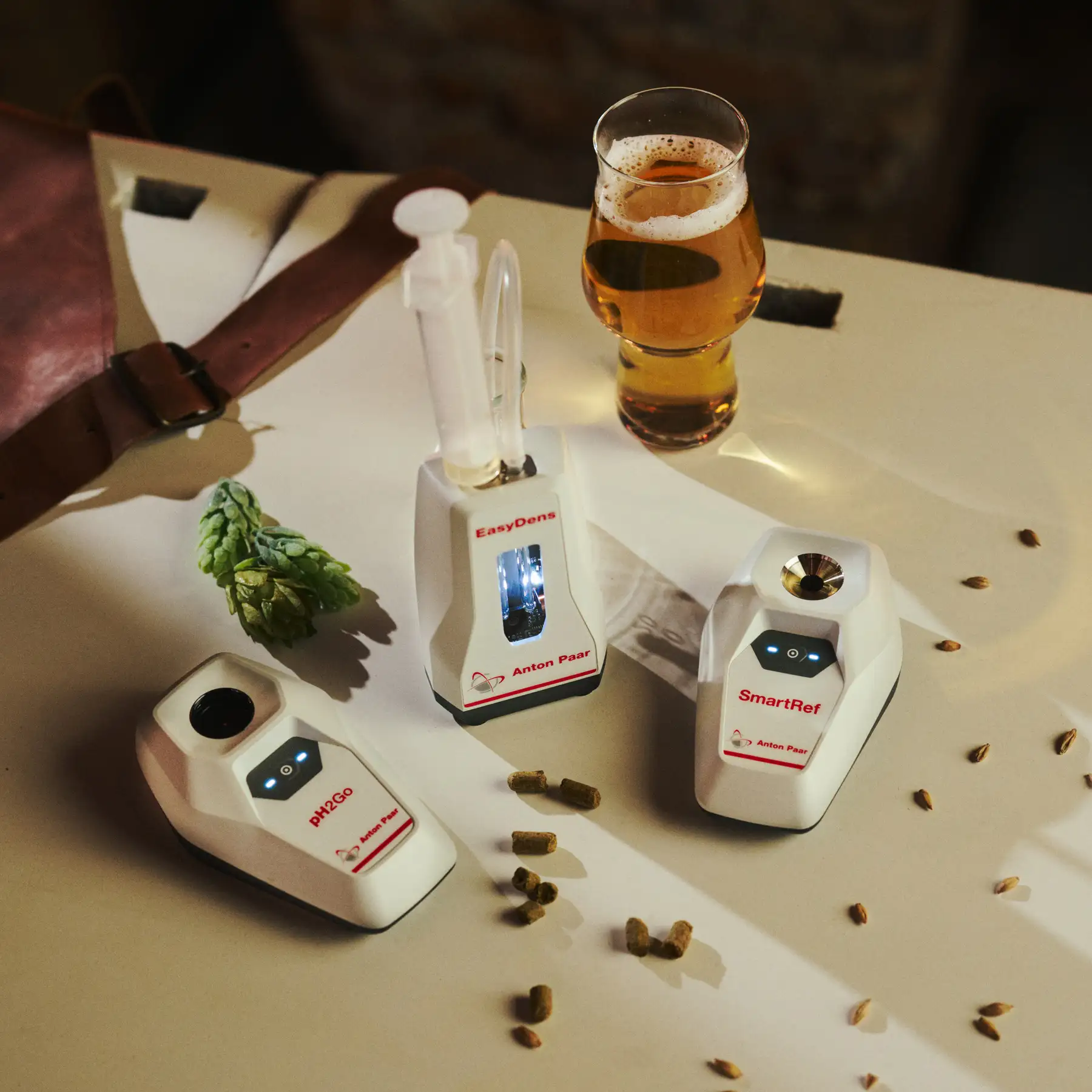
EasyDens, SmartRef, and pH2Go fit perfectly into an alcohol-free workflow. Together, these instruments help control three key levers that drive repeatability:
- Sugar extraction and starch conversion, supported by density and pH
- Alcohol formation and fermentation progress, supported by density and refractometry trends
- Microbial stability, supported by pH
1. Measuring what matters with repeatable checkpoints
A reliable process begins with consistent measurement at the points that actually influence the outcome.
- Mash and lauter: pH2Go helps keep mash pH in the optimal range for efficient enzymatic conversion and a clean flavor profile. Even small deviations can change wort fermentability, extraction behavior, and the perception of harshness in the finished beer.
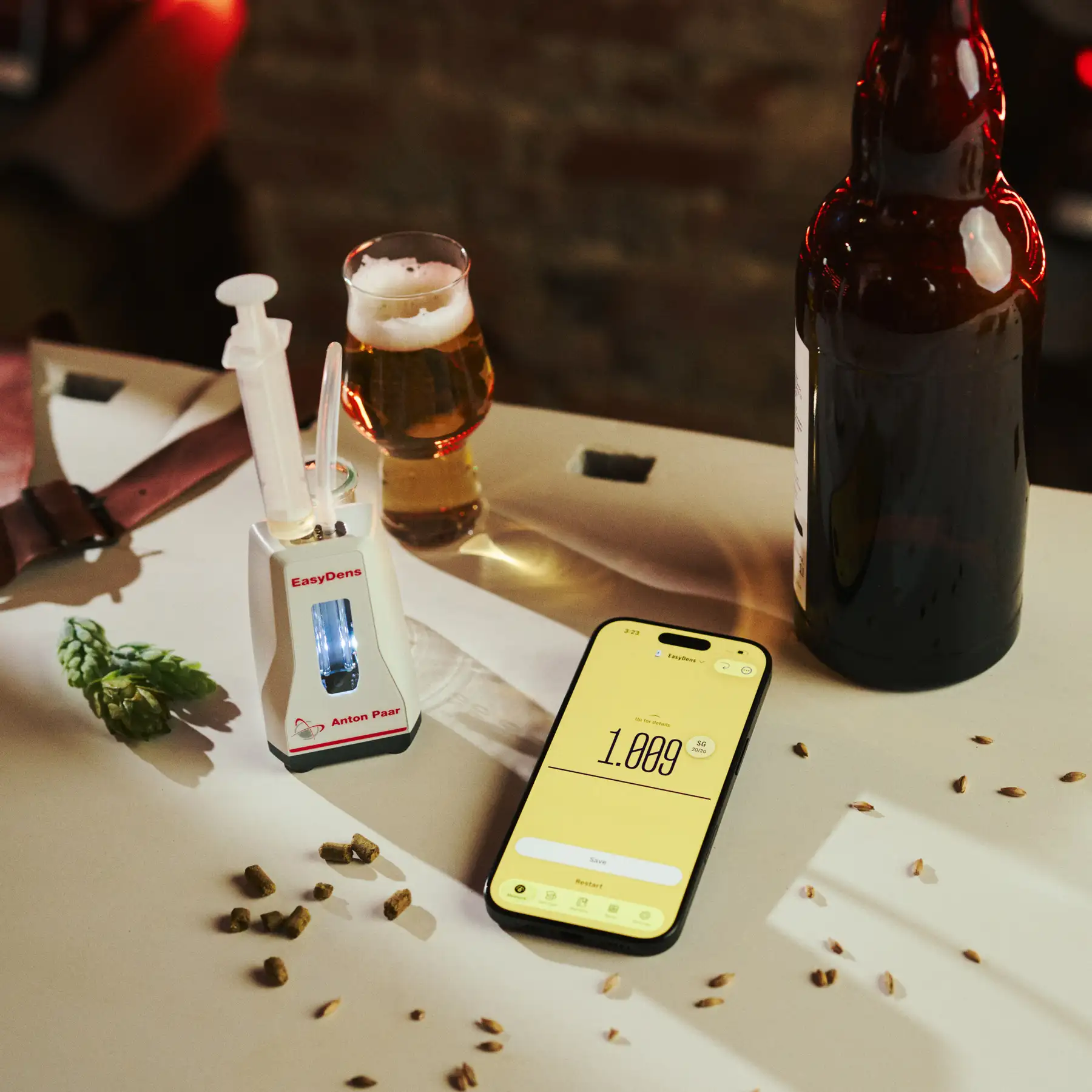
- Pre-boil and post-boil wort: EasyDens, and/or SmartRef, confirms wort gravity is on target. In non- and low alcoholic brewing, where lower original gravity and/or reduced fermentability are common, a deviation of only a few gravity points can materially affect final ABV and noticeably shift body and balance.
- Fermentation control: Whether the process uses specialty yeast, limited fermentation, or arrested fermentation, tracking gravity drop is critical. EasyDens and/or SmartRef provide precise gravity readings that show fermentation rate and help identify the intended endpoint.
- Blending or dilution: When ABV is fine-tuned by blending, consistent readings become the safety net. A pre-packaging verification with the EasyDens and SmartRef combo helps confirm that the intended ABV specification has been reached before committing a batch.
- Packaging readiness: pH is a simple but powerful stability indicator. Because non-alcoholic and low alcoholic beers are inherently less stable and more prone to spoilage, confirming a sufficiently low, consistent pH with pH2Go before packaging and tracking it from batch to batch becomes a practical control step.
2. Preventing the two major non-alcoholic failures: out of specification ABV and package instability
Non-alcoholic and low alcoholic beers are more prone to accidental refermentation, especially when fermentable extract remains, and viable yeast carries into the package. As a result, many breweries rely on forced CO2 carbonation rather than priming sugar and tighten controls during transfers and packaging. Measuring gravity before packaging helps confirm fermentation has truly stopped. Measuring pH helps detect drift that can increase spoilage risk.
3. Tracking and documentation for repeatability and compliance
When a batch performs well, it should be repeatable. When beer is sold across borders, ABV labeling and specifications may need to be defensible. Logging EasyDens gravity results, SmartRef spot checks, and pH2Go readings creates a practical production record that supports:
- consistent flavor and mouthfeel
- fewer dumped batches and fewer out of specification surprises
- smoother laboratory verification, because samples are more likely to pass on the first submission
Linking process control to laboratory analysis
The EasyDens and SmartRef combination can determine alcohol content with an accuracy of 0.5%v/v, which is highly useful for day-to-day process control and consistency but can be too broad as a final compliance proof when legal thresholds are tight. For that reason, an independent laboratory analysis is often needed for official verification.
Official norms for the measurement of non-alcoholic beers include, for example, MEBAK 9.3.1 (enzymatic determination) and MEBAK 9.3.2 (analysis by gas chromatography). In addition, measurement systems incorporating an Anton Paar Alcolyzer have been demonstrated to deliver equivalent and reliable results for non-alcoholic beers.
In alcohol-free brewing, quality is built on control rather than correction. Routine checkpoints for gravity, ABV, and pH reduce variability, protect stability, and make successful batches repeatable. With a clear trail of data and the option of standardized lab confirmation, non-alcoholic production becomes predictable and scalable.
Return to top
Expert Insights: Why Biology and Process Control Matter Most
To deepen the practical and technical perspective in this article, we spoke with Gebhard Sauseng and Matthias Ruatti (Brewmasters at Anton Paar Sudhaus Brewery, Graz, Austria) and René Rehorska (Senior Lecturer, Institute of Applied Production Sciences, FH JOANNEUM, Graz, Austria), complemented by Rehorska’s published research on maltose-negative yeast strains. Those experts emphasize that successful alcohol-free and low-alcohol beer is not simply about “taking out the alcohol,” but about controlling the entire fermentation process and keeping the beer in balance.
From a brewing perspective, maintaining body, mouthfeel, and flavor depends on deliberate choices around original gravity, mash design (including fast beta-amylase rests), and yeast selection. Poorly controlled processes quickly lead to thin, overly sweet, or unstable beers. A central theme of the interviews was the growing importance of biological approaches, especially maltose-negative yeast strains. Used correctly, these strains can limit alcohol formation without expensive dealcoholization equipment—an attractive path for small and mid-sized breweries—but they demand precise control of fermentation time, temperature, and hygiene.
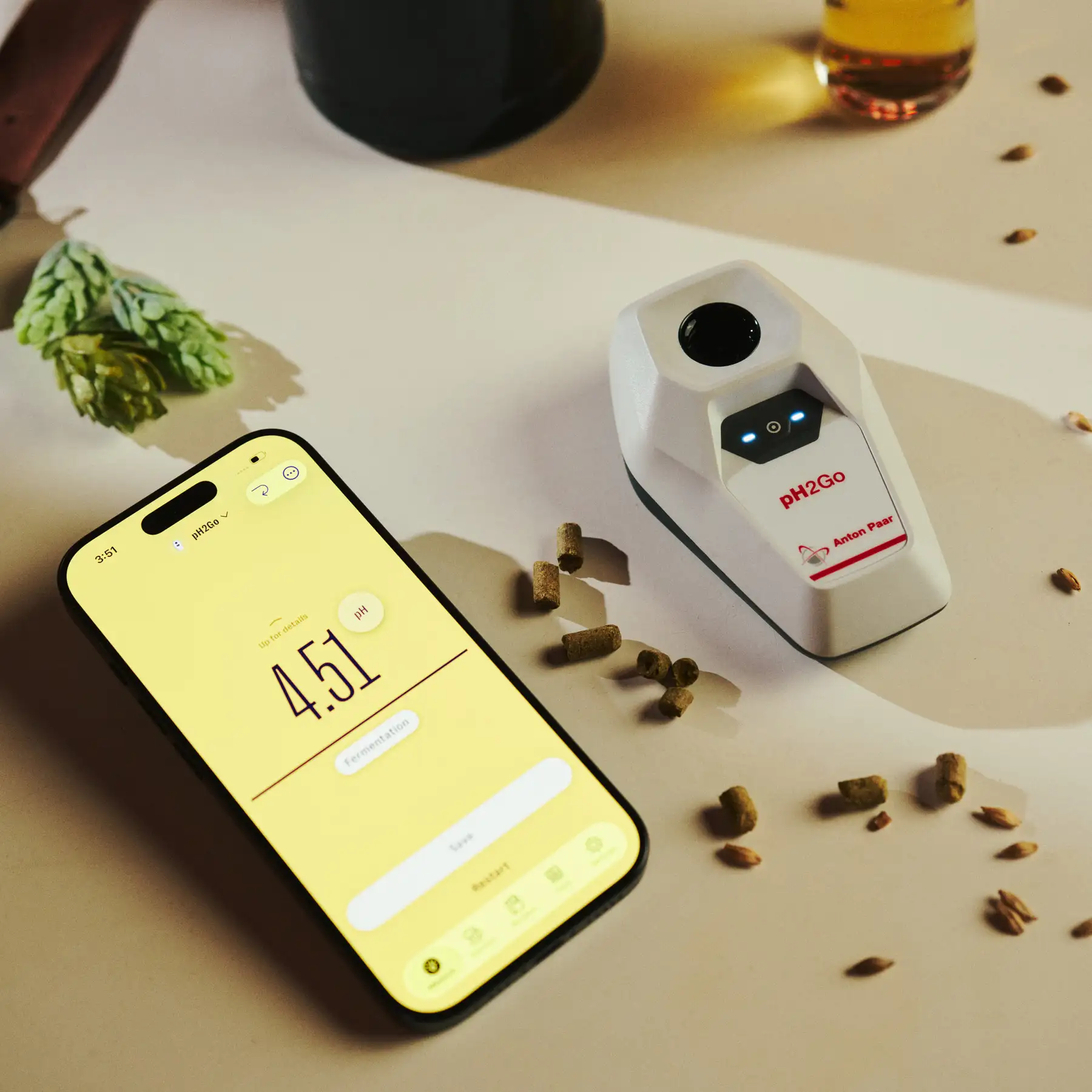
Rehorska’s work on yeasts from Styrian orchard meadows shows that maltose-negative strains can deliver sensorially more rounded low- and non-alcoholic beers than some physical dealcoholization methods, provided brewers closely monitor extract, fermentation progress, and final alcohol content. The experts also highlight stability risks as a defining challenge in alcohol-free brewing: high residual sugars, hop creep, and insufficient pH reduction significantly increase the risk of refermentation and spoilage. Keeping pH around 4.2 and verifying gravity and alcohol content with reliable measurement tools are therefore seen as essential safeguards.
Taken together, the experts’ views and the research point to the same conclusion: alcohol-free beer has matured into a quality-driven category. Brewers who treat it as a full, tightly controlled fermentation process—supported by sound biology and accurate measurement—are best positioned to produce stable, flavorful, and commercially successful alcohol-free and low-alcohol beers.
Return to top
Legal Definitions and Certification: What “Alcohol-Free” Means in Different Markets
One of the biggest challenges in brewing alcohol-free and low-alcohol beer is that there is no single global definition of what “alcohol-free” actually means. Thresholds and labeling rules differ by region, which has a direct impact on how you design your product and how tightly you need to control your final ABV.
In many EU markets, non-alcoholic beer is generally understood as beer with less than 0.5% ABV. While there is no harmonized EU-wide legal definition of “non-alcoholic beer,” the EU’s customs nomenclature and food information rules recognize a category of non-alcoholic beer below 0.5% ABV, and require clear ABV indication for beverages above 1.2% ABV. This means a beer that can be sold as “alcohol-free” in much of continental Europe at 0.5% ABV may fall into a different category elsewhere.
In the United Kingdom, the thresholds are stricter for the “alcohol-free” claim. Current guidance distinguishes between “alcohol-free” (no more than 0.05% ABV) and “low alcohol” (up to 1.2% ABV). Drinks above 0.05% ABV cannot be marketed as “alcohol-free” in the UK, even though a 0.5% beer would still be considered non-alcoholic in many EU countries. For brewers exporting into the UK, this often means separate labels and sometimes separate formulations.
In the United States, federal rules for malt beverage labels are set out in 27 CFR part 7 and implemented by the Alcohol and Tobacco Tax and Trade Bureau (TTB). For malt beverages, the term “non-alcoholic” may be used only if the product contains less than 0.5% alcohol by volume and the statement “contains less than 0.5 percent (or .5%) alcohol by volume” appears immediately adjacent to it, in readily legible printing on a contrasting background. The term “alcohol free” may be used only on malt beverages that contain no alcohol, and a malt beverage may not be labeled with an alcohol content of 0.0% ABV unless it also meets the “alcohol free” standard. In addition, products containing less than 0.5% ABV cannot use class designations such as “beer,” “lager,” or “ale” and must instead be designated as “malt beverage,” “cereal beverage,” or “near beer.”
Regardless of the threshold that applies in a given market, regulators expect that any stated alcohol by volume (ABV) can be backed up by reliable laboratory analysis when required. In the European Union, Regulation (EU) 2017/625 on official controls sets the framework for how Member States verify compliance with food and feed law, including alcoholic beverages, by requiring competent authorities to carry out official controls such as sampling and testing in designated official laboratories. In the United Kingdom, HM Revenue & Customs’ Alcoholic Products Technical Guide explains how alcoholic strength must be determined for duty and confirms that, where strength is in doubt or disputed, HMRC may rely on the results of analysis carried out by an appropriate laboratory. In the United States, the Alcohol and Tobacco Tax and Trade Bureau (TTB) operates a Beverage Alcohol Laboratory that performs compliance testing of beverage alcohol products, using official methods of analysis to determine whether products meet the regulatory requirements in 27 CFR, including alcohol content and related labeling or classification issues.
For brewers, this means two layers of control:
- In-house process control, where instruments such as density meters, refractometers, and pH meters (like EasyDens, SmartRef, and pH2Go) help keep the processes on track so that the final ABV stays safely within the target range for each market.
- Independent confirmation, where an external, accredited lab performs an official ABV analysis and issues documentation that can be used for label approval, compliance checks, and, if necessary, to demonstrate that the beer truly meets “alcohol-free” or “low alcohol” criteria in the destination country.
Putting robust in-process measurements and documentation in place doesn’t replace official lab analysis, but it does make it far more likely that the sample you send for certification will pass the first time, avoiding costly rework or relabeling when you’re aiming for tightly defined “alcohol-free” thresholds.
Return to top
Bringing It All Together: Reliable Control for Alcohol-Free Brewing
Alcohol-free and low-alcohol beer sits at the intersection of flavor, process control, and regulation. The methods you choose – from limited fermentation and specialty yeasts to dealcoholization or blending – all depend on one common foundation: knowing exactly what is happening in your beer at every key step. Without reliable measurements of gravity, ABV, and pH, it’s almost impossible to consistently hit tight targets like ≤0.5% ABV while still delivering a beer that feels true to your brand.
This is where Anton Paar and our tools come into play. EasyDens, SmartRef, and pH2Go are designed to give breweries of all sizes lab-grade insight, right where the work happens: in the brewhouse, cellar, and packaging area. By building simple checkpoints into your process – from mash pH and wort gravity to fermentation progress, blending control, and final pH – you can stabilize flavor, improve microbiological safety, and reduce the number of batches that drift out of specification.
Combined with occasional verification from an accredited laboratory, this in-process control gives you both the confidence to scale your alcohol-free and low-alcohol portfolio and the documentation to show that your beers meet the legal definitions in your target markets. In other words, quality becomes repeatable, compliance becomes manageable, and surprises become the exception rather than the rule.
Ready to tighten control over your alcohol-free brewing? Visit easydens.com to learn more about EasyDens, SmartRef, and our brand new pH2Go.
Return to top
About Partner Provided Content
This content has been provided by one of our many Partners. Partner-provided content is designed to add value and expert insight into all aspects of the brewery and craft beverage industry. The content may contain ads and promotions. The views and opinions expressed in this content are those of the Partner and do not necessarily reflect the views of our company and associated brands.

About The Author
Anton Paar ConsumerTec
Anton Paar ConsumerTec GmbH, founded in 2020, is one of the newest companies within the Anton Paar Group. We bring Anton Paar’s renowned measurement expertise from industry and research into everyday life by developing innovative measuring instruments and software solutions for private users. Through our own webshop, we serve as a direct point of contact for private customers worldwide.